
Abstract
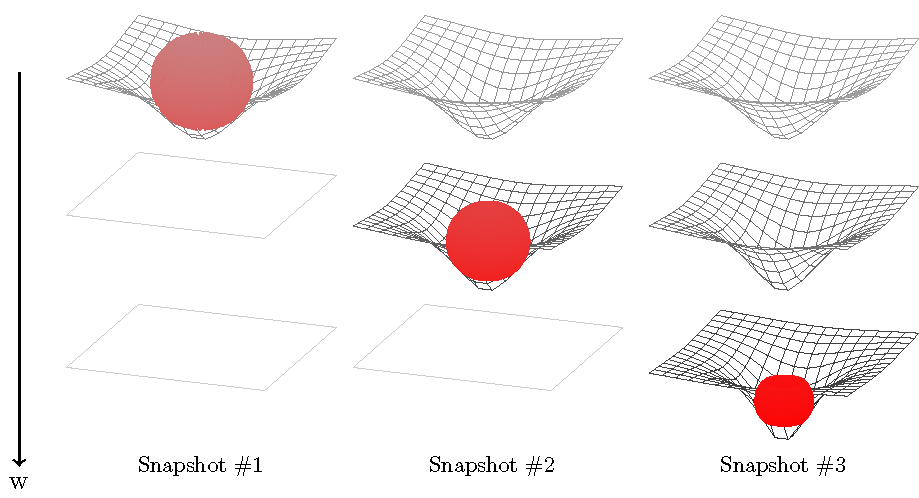
We describe a novel interpretation of the time dimension in General Relativity: the Holochronous Principle, and show that the application of this principle in standard cosmological situations is able fully to account for the effects currently attributed to Dark Matter in observational phenomena such as galactic rotation curves and gravitational lensing.
We re-evaluate the role of the Friedman equations in defining a time varying spacetime metric, and in their place postulate a model that is based on the ‘shrinkage’ of baryons in a gravitational field to account for the dynamical behaviour of the cosmic scale factor. We show that integrating the Holochronous Principle into this model gives rise to a solution that takes the form of a resonant universe, in which the resultant damped oscillations can account for the observed accelerating expansion rate of the universe, to a greater level of precision than the standard ΛCDM model. The Holochronous model obviates the need for Dark Energy in the form of a cosmological constant, Λ, and also resolves other issues associated with the ΛCDM model, including the Ω=1 flatness problem.
Full Text
https://vixra.org/pdf/1606.0258v1.pdf
Leave a Reply